
· By Mark Delaney
Lick Mat vs Snuffle Mat vs Puzzle Feeder: What Each One Actually Does
These three get shelved together under one word, enrichment, then bought as if they were interchangeable. They are not. Each rewards a different behavior, leaves a different mess, and asks a different amount of your evening before it is ready again. After twelve years of loading all three in my own kitchen, here is what separates them, using the method on our how we test page.
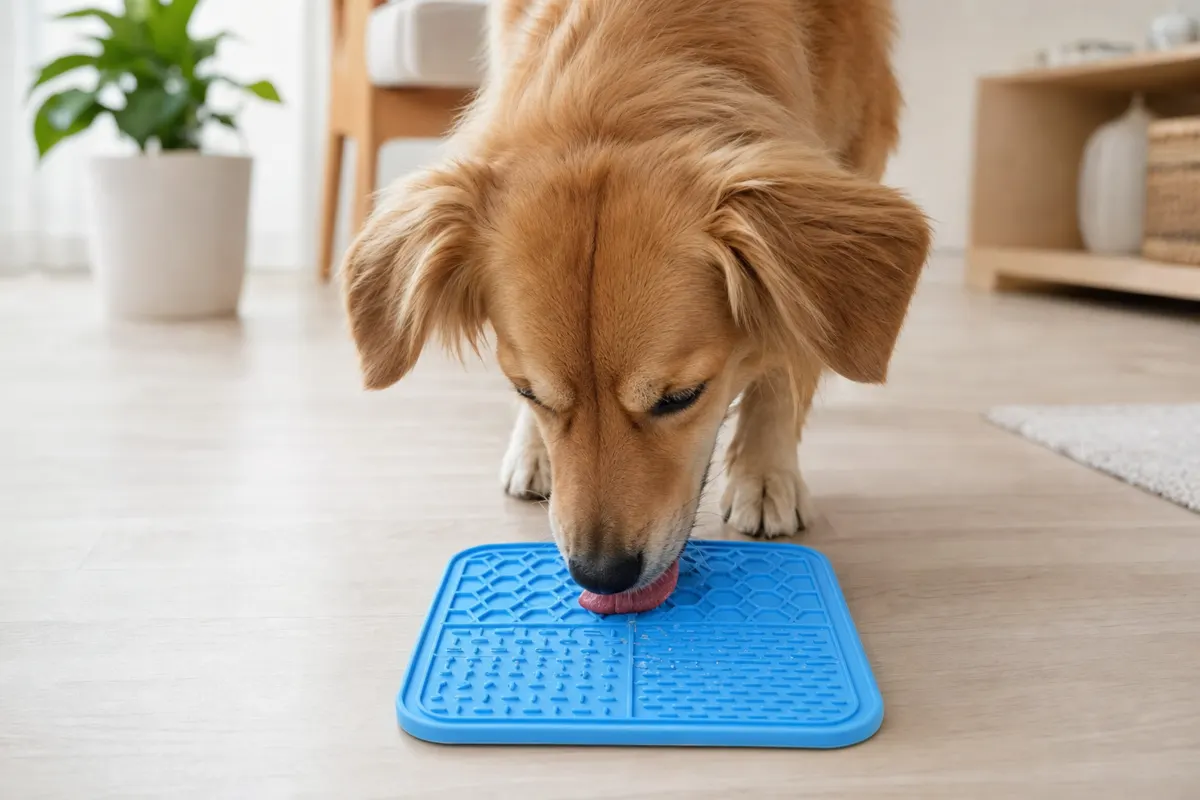
Three formats, three different jobs
Strip away the marketing and each format is a single verb.
A lick mat is a licking surface. Soft food goes into a fine texture, and the tongue is the only tool that gets it out. The work is slow, repetitive, and identical from the first pass to the last, which is exactly why it settles a dog rather than revving one up.
A snuffle mat is a fabric foraging surface. Strips of fleece are tied to a backing, dry pieces are scattered down into them, and the dog roots through the pile with its nose until the pieces are gone. The verb is search.
A puzzle feeder is a mechanism. A rigid tray or a rotating body holds food behind sliders, lids, or compartments, and the dog moves the parts with paws and nose until the food is released. The verb is solve.
The licking job: slow, steady, self-soothing
Licking is the one behavior here that dogs already use to calm themselves. It is why a dog licks its paws when unsettled, and a loaded mat gives that instinct somewhere useful to go. There is no goal to reach and no puzzle to finish, so nothing can go wrong for the dog. That is why we built the LickJoy Mat around it.
Three things follow from a surface that is flat, soft, and silicone. It takes suction cups on the back, so it holds to tile and glass at nose height, which is what makes a bath something other than a wrestling match. It goes into the freezer flat, and a frozen topping stretches the same spoonful into a far longer session, the trick we lay out in our frozen treats guide. And it takes soft food of every kind: yogurt, pumpkin, wet food, a soaked meal spread thin, all on the safe list in our toppings guide.
Difficulty is a matter of loading, not of buying a harder object. The LickJoy Mat carries two texture zones for that reason: a honeycomb field of open pockets for a dog new to the format, and a crosshatch grid whose finer lines hold a thin smear so tightly a fast tongue has to slow down. Same mat, two speeds, decided by which side you fill.
The sniffing job: a nose hunt through fabric
A snuffle mat is the format that runs on scent. Dry pieces disappear into a deep pile of fleece and the dog works the surface with its nose to find them. Owners reach for it when the meal is dry kibble, since scattered pieces have to be found one at a time.
It asks for a dog with the drive to keep searching, and a room you do not mind sharing with the search. Pieces small enough to fall into fleece are small enough to fall out of it: flicked past the edge, landed under furniture, or left buried by a dog that stopped halfway. The format is built for the dry side of the menu, since fabric absorbs and spreads, wet food and anything oily are not what fleece is made to hold.
Then there is the turnaround. A fabric mat that has been nosed through all week goes into a wash and then has to dry all the way through before it can be filled again, and dense fleece does not dry the way a flat sheet does.
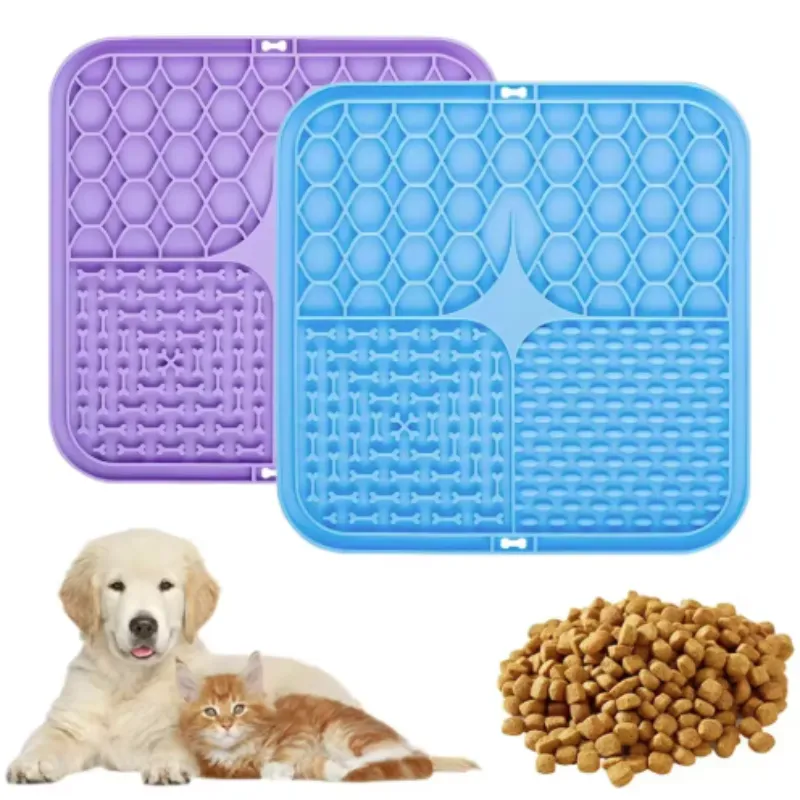
The solving job: paws, parts and a problem
Puzzle feeders are the most mechanical of the three. Sliding covers, spinning discs, lift-out plugs, compartments under a lid: the dog works out the movement, then repeats it until the tray is empty. For a clever dog on a rainy afternoon, that is a session with a beginning and an end.
Two things come with the mechanism. A puzzle has a solution, and once a dog has it the object stops being a puzzle: I have watched a tray meant for a long session get stripped in the time it took me to put the lid back in the drawer. And difficulty is fixed by the design. Set too high, the dog gives up on the game and starts on the tray itself; set too low, you have an oddly shaped bowl. Some of the most overbuilt feeders I have tested frustrated more than they fed.
The parts come back to you at the sink. Sliders sit in channels, lids sit in seams, and dry food packs into both, so a rigid tray is a hand-wash item with crevices a cloth cannot reach and a brush has to.
Side by side: the mess, the sink and the next session
| Lick mat | Snuffle mat | Puzzle feeder | |
|---|---|---|---|
| What the dog does | Licks a surface clean | Noses through fabric | Moves parts with paws and nose |
| What it holds | Spreads, wet food, soaked meals | Dry pieces and small treats | Dry pieces and small treats |
| Where the food ends up | On the mat, then gone | Down in the fleece, some on the floor | In the tray, in the seams, sometimes across the room |
| Getting it ready again | Warm water at the tap | A wash, then a full dry | Hand-wash the parts, dry the crevices |
| Goes in the freezer | Yes, flat | No | No |
| Holds to a wall | Yes, suction cups | No | No |
| Setting the difficulty | How thin you spread it, and the freezer | How deep the pieces are buried | Fixed by the design |
The row that decides most households is the fourth. Enrichment happens on the days you can face setting it up, and the format you reach for on a bad evening is the one that was clean and dry in the cupboard. Warm water lifts most of a topping off food-grade silicone in one pass. The full routine is in our guide to cleaning a lick mat.
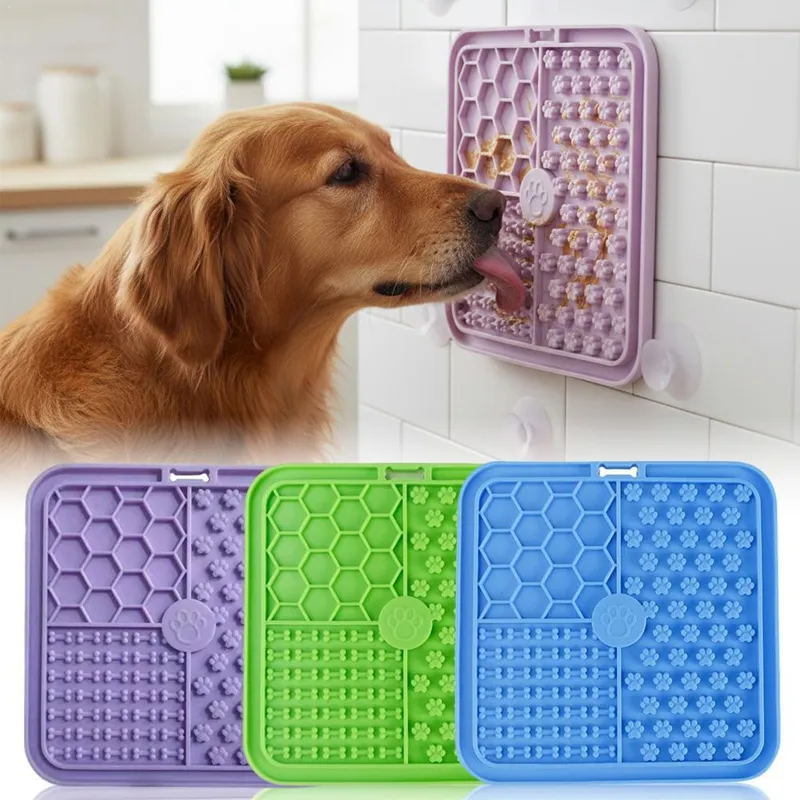
Which dog suits which format
The dog that inhales dinner. Spread the meal thin across a mat and the same portion becomes minutes of tongue work instead of seconds of gulping. If your dog eats a full ration and speed is the daily battle, the raised LickJoy Bowl is built for full portions: the Bowl at mealtimes, the Mat for everything else.
The dog that dreads the bath, the brush or the nail clippers. This is the case the flat format was made for: the mat goes on the tile at nose height, the dog stays busy, and both of you get out dry. Our calming routine walks through the setup.
The dog that cannot settle in the evening. Storms, fireworks, guests at the door, crate rest after a vet visit. You want the behavior that winds a dog down rather than one that fires it up, and steady licking is that behavior. If the distress is severe or new, start with your veterinarian or a qualified behavior professional and keep the mat for the daily routine alongside their advice.
The clever dog that finishes everything. Load the crosshatch side, spread the topping thin rather than thick, and freeze the whole mat flat. That is a much longer session than the same food served soft, and it costs nothing.
Puppies and seniors. Licking needs no joints, no jumping and no problem-solving, which makes it the gentlest of the three at both ends of a dog's life. Portions and textures for the youngest are in our puppy guide.
Cats in the house. The same instinct works on the feline side, with a few topping differences covered in our lick mat for cats guide. One mat, both animals.
How the three fit into one week
Look at an ordinary week rather than at a shelf and the picture sorts itself out. Bath day is fixed, grooming is fixed, meals happen twice a day, and storm season is certain even when the dates are not. Those moments all want the same thing: something the dog can keep doing calmly, in one spot, while you get on with the job.
Nose hunts and puzzle trays are afternoon activities, for the days you have the space and the time at the sink. The licking format is the one that survives a normal week: a spoonful, a spread, and it is clean again before the dog has finished shaking off.
Two habits keep it that way. Count every topping toward the day's calories, with the sums by bodyweight in our guide to lick mat calories, and keep sessions supervised, since a mat is made to be licked rather than bitten. The range of dogs the format has worked for is in our verified reviews.
Lick mat, snuffle mat and puzzle feeder questions, answered
Can one mat cover what all three formats do?
The lick mat answers the moments that come back every week: the bath, the nail trim, the storm, the meal a gulper inhales in seconds. It takes soft food, holds to a wall, goes flat in the freezer, and rinses under the tap in a pass, so it is ready again the same afternoon.
Can I put wet food on a snuffle mat?
Fabric formats are built around dry pieces and small treats, which is what fleece holds and releases. Spreads, yogurt, pumpkin, soaked meals and wet food belong on a smooth silicone surface that food sits on rather than soaks into.
Which format settles an unsettled dog fastest?
Licking is the behavior most closely tied to settling: repetitive, rewarding on every pass of the tongue, and asking nothing of a dog that is already wound up. Sniffing and problem-solving put a dog to work, which is a different outcome: they engage a dog rather than wind one down. A dog in real distress needs your veterinarian or a qualified behavior professional.
My dog empties a puzzle feeder in seconds. What now?
Difficulty on a lick mat is a matter of loading, not of buying something harder. Press the food into the crosshatch grid rather than the honeycomb pockets, spread it thin, and freeze the loaded mat flat. The same topping then takes far longer, at no extra cost.

Mark Delaney · Canine enrichment writer
Mark has spent 12+ years living with high-energy dogs and has hand-tested dozens of lick mats and slow feeders to find what actually keeps dogs busy and calm.
Start with the format you will actually use
Two texture zones, a suction-cup base for tile and glass, and food-grade silicone that rinses clean under warm water. The LickJoy Mat is the licking format in this comparison.
Shop the LickJoy Mat →Free shipping · 30-day money-back guarantee