
· By Mark Delaney
Are Lick Mats Good for Dogs? The Benefits and the Limits
I bought my first lick mat as an experiment and expected very little from a flat piece of silicone. Twelve years and dozens of tested mats later, it is the one piece of enrichment gear I recommend to almost every dog owner I meet. The internet oversells these things, so here is exactly what a mat does, built from years of daily use with my own high-energy dogs and the methodology we describe on our how we test page.
How lick mats work
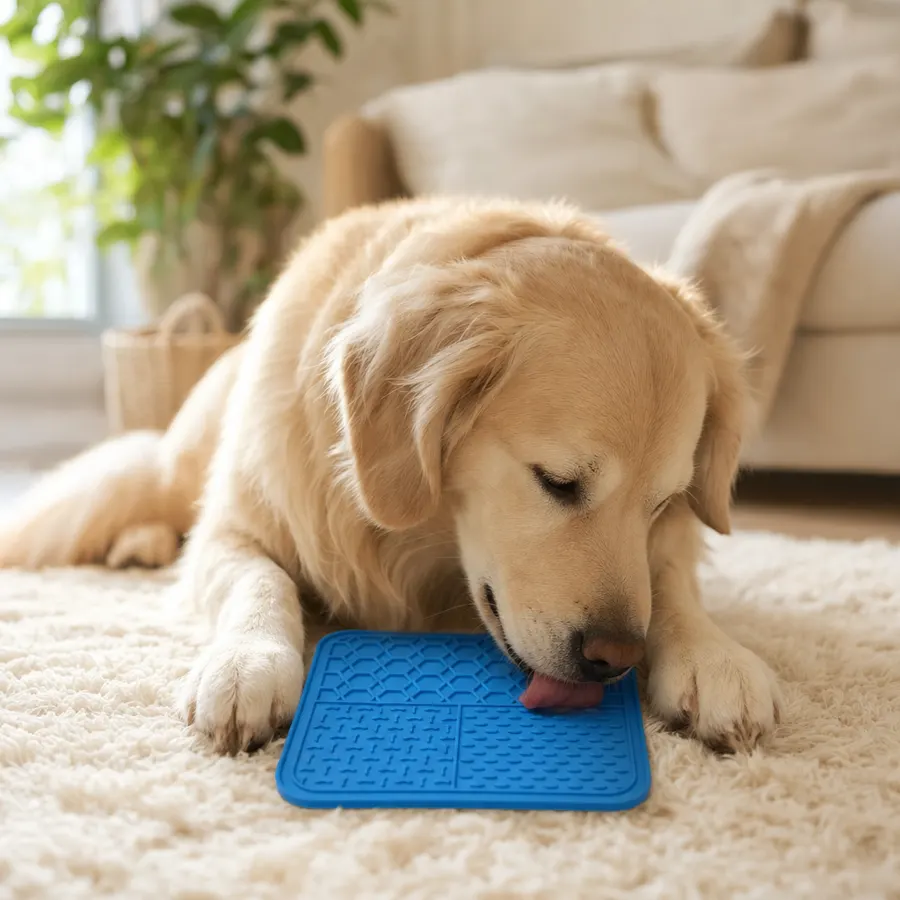
A lick mat is a textured surface that holds soft food in grooves and pockets, so a dog has to lick steadily, sometimes for twenty minutes or more, to get every trace. The mechanism behind the calm is the licking itself. Canine behavior specialists widely describe licking as a self-soothing behavior, the same reason dogs lick their paws when unsettled. A mat channels that instinct into something productive: repetitive, focused, and rewarding at every pass of the tongue.
There is a reason this matters for so many households. A large study of 13,715 pet dogs published in Scientific Reports found that a large majority showed at least one anxiety-like behavior, with noise sensitivity the most common trait.
Share of 13,715 pet dogs showing at least one anxiety-like behavior in a large Finnish study
A lick mat does not make that statistic go away. What it offers is a practical outlet: a focused activity you can hand a dog during the specific moments that tend to unsettle them.
The real benefits, one by one
Calmer baths and grooming. This is the flagship use in our house. A mat stuck to the shower wall keeps a dog busy through a full shampoo and rinse, turning a wrestling match into a quiet routine. Our calming guide walks through the exact setup step by step.
Slower eating. Spreading wet food or soaked kibble across a mat forces a gulper to eat at a licking pace. For dogs who inhale from a bowl, that alone justifies the purchase. For full-portion meals, a raised slow feeder bowl with a central dome is the more complete answer, and many owners end up using both.
Boredom relief. Rainy days, video calls, crate rest after a vet visit: a loaded mat is twenty minutes of quiet, self-directed work. Freeze the topping and it lasts considerably longer, a trick we cover in our frozen treats guide.
Easier handling and training. A mat gives puppies and rescues a positive anchor during brushing, nail trims, and handling practice. New owners should start with our puppy guide for portions and precautions.
It works for cats too. The same licking instinct exists on the feline side, with a few topping differences we explain in the lick mat for cats guide.
Silicone or rubber: what the mat is made of and what it changes
Almost every lick mat on the market is one of two materials, and the difference shows up in daily use long before it shows up on a spec sheet. Rubber is the firmer of the two, the material behind most chew toys, and the texture it carries tends to be thicker and blunter. Silicone is softer and far more flexible, and it takes the fine, sharp-walled texture a licking surface actually needs: the honeycomb pockets and crosshatch lines that hold a thin smear in place and make a tongue work for every trace.
What flexibility changes. A mat that bends lies flat on the floor instead of curling at the corners, and it lets the whole back work as a bed of suction cups that holds on tile and glass, which is what makes bath time possible in the first place. It also takes the freezer flat, and that is the whole basis of the frozen sessions that make a loaded mat last considerably longer.
What it changes at the sink. Food-grade silicone is smooth and non-porous, so a topping sits on the surface rather than soaking into it the way it would into a porous one, and warm water lifts most of it in a single pass. The LickJoy Mat is a hand-wash item, which on a flat mat is barely a constraint: the same warm water that softened the topping releases it at the tap, and a soft brush reaches every pocket. The full routine is in our guide to cleaning a lick mat.
What no material changes. Whichever surface you hand your dog, a mat is made to be licked, not bitten. The fine texture that makes a session last is exactly what disappears when a mat is treated as a chew toy, so keep sessions supervised and sit with the enthusiastic chewers.
What a lick mat covers, and what needs a professional
| What a lick mat does well | What it will not do |
|---|---|
| Occupies a dog during baths, storms, and grooming | Resolve deep-seated fear or separation distress on its own |
| Slows down fast eaters at mealtime | Replace walks, play, and real exercise |
| Channels licking into a productive outlet | Teach obedience or manners by itself |
| Gives crated or resting dogs quiet work | Stay hygienic without regular washing |
Three practical caveats from long experience. Supervise sessions, especially early on, because a determined chewer can decide the mat itself looks tasty. Wash the mat after every use, since dried food residue builds up fast in textured surfaces; food-grade silicone rinses clean easily under warm water, which is one reason it is the material I look for. And count every topping toward daily calories, using the safe foods in our toppings guide rather than whatever happens to be in the refrigerator door, with the sums laid out in our guide to lick mat calories.
Which dogs get the most out of one
After testing mats with dozens of dogs of every size and temperament, a clear pattern emerges. The biggest winners are fast eaters, dogs who struggle with baths and grooming, high-energy breeds who need a decompression activity, puppies learning to settle, and noise-sensitive dogs during storms and fireworks. Senior dogs enjoy them too, since licking demands no joints and no sprinting.
The dogs who benefit least are the rare few with no food motivation at all, and heavy chewers who treat every object as a challenge, who should only use a mat with an owner sitting right there. If you are unsure which camp your dog falls into, the experiences collected in our verified reviews cover a range of dogs, from obsessed on day one to needed a week to warm up.
The verdict: what a lick mat earns its place for
For the price of a bag of treats, a lick mat adds a calm button to your daily routine: not a magic one, but a reliable one. It earns its place in the cupboard the first time you get through a bath without a soaked bathroom, and it keeps earning it at every thunderstorm and slow Sunday after that. Used with sensible toppings, honest portions, and a little supervision, it is one of the best value pieces of enrichment gear a dog owner can buy.
If you are ready to try one, the LickJoy Mat is the version we designed around everything above, with two texture zones and a suction-cup base that holds to floors and tile. And if mealtime speed is your main concern, start with the LickJoy Bowl instead.
Lick mat material questions, answered
What are lick mats made of, silicone or rubber?
Both materials are on the market. Rubber is firmer and holds a thicker, blunter texture; silicone is softer and flexible, which is what lets a mat lie flat, carry a fine texture, and back itself with suction cups. The LickJoy Mat is made of food-grade silicone, with a honeycomb zone and a crosshatch zone on top.
Is a silicone lick mat safe for my dog to lick every day?
Daily use is what these mats are for, with two habits attached. Wash it after every session: the FDA advises washing pet food bowls and utensils with soap and hot water after each use, and a mat is a feeding surface like any other. Food-grade silicone rinses clean under warm water. And supervise, because a mat is a licking surface rather than something to chew.

Mark Delaney · Canine enrichment writer
Mark has spent 12+ years living with high-energy dogs and has hand-tested dozens of lick mats and slow feeders to find what actually keeps dogs busy and calm.
See what the fuss is about
Two texture zones, a suction base, and easy-rinse food-grade silicone. The LickJoy Mat is the simplest way to test everything in this article.
Shop the LickJoy Mat →Free shipping · 30-day money-back guarantee