
· By Mark Delaney
How to Clean a Lick Mat: The Routine That Keeps It Ready
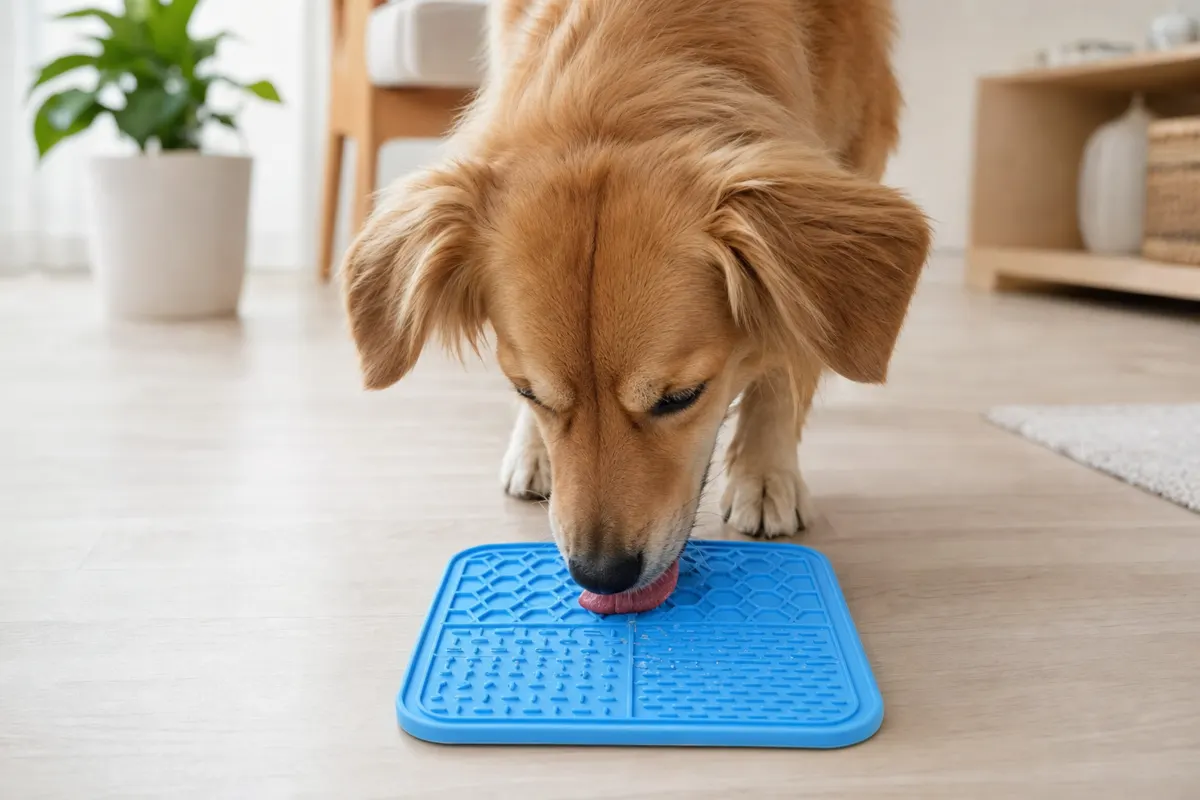
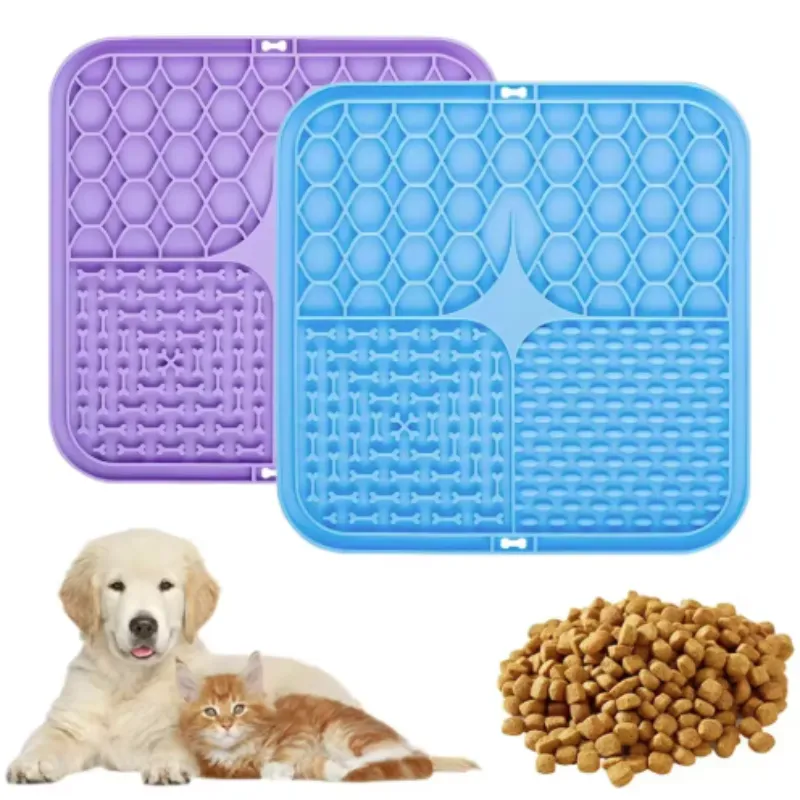
The texture is the whole point of a lick mat. Honeycomb pockets hold a thick spread in place, a crosshatch field makes the tongue chase every last trace, and between them they turn a gulped snack into a proper session. That same texture is what you are cleaning afterward, and the job is decided almost entirely by when you do it rather than how hard you scrub. Here is the routine I have settled on after years of loading, freezing and rinsing these things, tested the way we describe on how we test.
Rinse while the food is still soft
If you take one thing from this guide, take this: carry the mat to the sink on your way out of the room. Your dog has just done most of the work for you, and whatever is left is still soft and still willing to move. Warm tap water alone lifts the majority of it at that stage.
What changes the difficulty is time. Yogurt, pumpkin purée and soaked kibble all behave like paint: fluid while wet, settled once dry. So build the habit into the session rather than into your evening. Load the mat, let your dog work it, collect the mat, rinse the mat, always in that order. Owners describe cleanup as a non-event once it is automatic, and you can read how the routine fits into real households in our verified reviews.
Food-grade silicone helps here more than any technique. It is smooth and non-porous, so food sits on the surface rather than in it the way it soaks into a wooden spoon, which is why warm water is usually enough.
The soak-and-brush method for dried-on food
Scraping is the instinct and it is the wrong one. A fingernail or a knife edge works against the raised walls that make the mat useful, and takes far longer than letting water do the job. A soak reverses the drying that caused the problem, and purée that looked welded on lifts with a brush afterward.
Brush direction matters more than pressure. On the honeycomb zone, push the bristles down into the pockets rather than sweeping across their tops, since sweeping polishes the walls and leaves the corners loaded. On the crosshatch zone, run the brush along the channels rather than across them. Two passes each way and the surface is clear.
Mild dish soap is the right product: it breaks up food oils on plates, which is the same task in a smaller space. Save the heavy chemistry for the oven. Bleach, abrasive powders and scouring pads have no business on a surface your dog licks, and a scouring pad dulls the texture you paid for.
Peanut butter, cheese, and the oily toppings
Peanut butter is the classic lick mat topping and it behaves differently from the rest. It is oil-based, so cold water just pushes it around. Warm water loosens it; a drop of dish soap emulsifies what the water loosened; the brush then has something to remove rather than something to smear. Run the tap warm before the mat goes under it.
Cream cheese and full-fat yogurt sit in the same family. The tell is a faint slick left after the visible food is gone, and an oily film is what turns a fresh smell stale over a week of daily sessions. If your fingertip squeaks on the surface, it is clean. If it glides, add a little more soap and brush again.
One loading habit makes all of this easier, and it stretches the session too: spread thin. A thin, even layer gives your dog more surface to work and leaves less mass afterward, while a thick blob compresses into the deepest pockets and gets pushed further in by an enthusiastic tongue. Our guide to what to put on a lick mat covers the spreading technique in detail.
Cleaning up after a frozen session
A frozen mat is the easiest one to clean, and almost nobody expects that. Freezing a topping flat means it thaws as it is eaten, so what remains at the end is a thin damp film rather than a set crust. Warm water clears it immediately.
One habit is worth keeping: rinse a frozen mat before you reload it, not just after. A mat that goes from freezer to floor to freezer to floor builds a residue layer that never gets a proper wash, because each session hides the last. If you batch-prepare several loaded mats, as described in our frozen treats guide, wash each one when it comes back rather than stacking it into the next round.
Let a frozen mat come back to room temperature before it meets hot water: a very cold surface makes fat set on contact, turning a soft film into a waxy one.
Drying and storing, the step most people skip
Rinsing is half the routine. Drying is the other half, and it is the half that gets forgotten. A textured surface holds droplets in every pocket, and a still-damp mat put away in a closed drawer keeps that water trapped for hours.
Shake it first. Hold the mat by one edge, give it two firm flicks over the sink, and most of the water leaves the texture at once, which is something a flat plate can never do for you. Then stand it on edge in a dish rack rather than laying it flat, so the rest runs off instead of pooling in the pockets.
Where you put it afterward matters too. Upright in a rack, on a hook, or flat on an open shelf all work, because air reaches both faces; a sealed container does not. Dry the suction cups as well, since a cup stored wet holds a small pool against the mat.
Cleaning the LickJoy Bowl
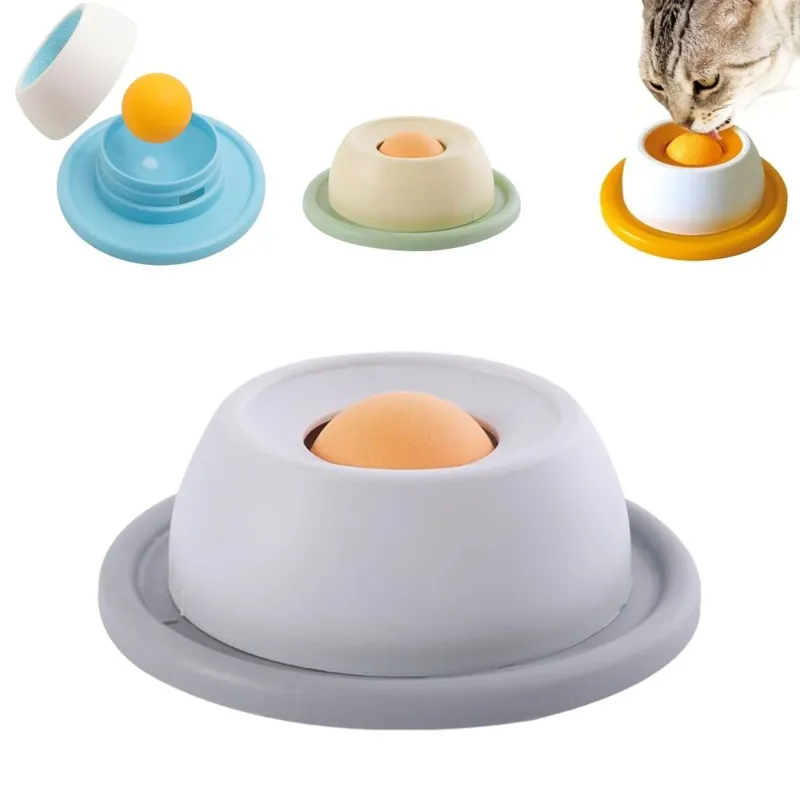
The Bowl is built to come apart, which changes the job entirely. The center dome lifts straight off the base, so both parts rinse clean under warm water with a drop of mild soap and nothing stays hidden underneath. If food has dried on, let the pieces soak for a minute and the residue releases easily. Air dry both parts and the Bowl is ready for the next meal.
Two places deserve attention: the seam where the dome meets the base, where a runny mix such as broth-soaked kibble collects, and the nubs on the dome, which take the same brush treatment as the mat's texture. Both are in the open once the dome is off.
Like the Mat, the Bowl is a hand-wash item, and both parts should be fully dry before the dome goes back on, since reassembling damp traps water between the pieces. The format is covered in full on our slow feeder bowl for dogs page.
How often to clean, and what to look at while you do
After every session, and that is not a preference. A lick mat is a feeding surface, and feeding surfaces get washed between uses like any plate in your kitchen.
How often the FDA advises washing pet food bowls and scooping utensils, with soap and hot water
— U.S. Food and Drug Administration, Tips for Safe Handling of Pet Food and Treats, 2026
That guidance is written for bowls, and a mat does the same job in a flatter shape. If anything the case is stronger, because a mat spends its session on the kitchen floor, on a tiled wall or in a tub rather than raised on a stand. Puppies deserve the strictest version of the rule, which is why our puppy starter guide makes washing after every use a founding habit.
Use the time at the sink as an inspection. You are already holding the mat under good light, so run a thumb over the honeycomb walls and the crosshatch field and check the pattern still feels sharp rather than rounded, since sharp texture is what keeps slowing your dog down. Check the suction cups for trapped food or water, and glance along the edges for the marks a determined chewer leaves, which is your cue to keep sessions supervised, as we set out in our overview of lick mat benefits.
Rinse warm, brush the texture, shake, stand it up to dry: four moves, nothing beyond the dish soap already at your sink, and the mat you hand your dog on a Friday is in the condition it was in on day one.
Lick mat cleaning questions, answered
Can I put a lick mat in the dishwasher?
The LickJoy Mat and the LickJoy Bowl are both hand-wash items. On a lick mat that is barely a constraint: the same warm water that softened the topping releases it at the tap, and a soft brush reaches every pocket in one pass.
How do I get peanut butter out of the texture?
Warm water and a drop of mild dish soap. Peanut butter is oil-based, so cold water pushes it around while warm water loosens it. Move a soft brush down into the honeycomb pockets and along the crosshatch lines rather than in circles, then rinse until the water runs clear.
How often should I clean my dog's lick mat?
After every session. The FDA advises washing pet food bowls and utensils with soap and hot water after each use, and a lick mat is a feeding surface like any other. A rinse after each session also keeps the texture doing its job.
What if food has dried hard in the pockets?
Do not scrape at it. Fill the sink with warm water, drop the mat in, and leave it a minute or two. Dried food rehydrates and lets go of the silicone on its own. Then brush, rinse, and air dry as usual.

Mark Delaney · Canine enrichment writer
Mark has spent 12+ years living with high-energy dogs and has hand-tested dozens of lick mats and slow feeders to find what actually keeps dogs busy and calm.
A mat that rinses as fast as it fills
Smooth food-grade silicone, two texture zones that clear under the tap, and suction cups that hold it wherever you need it. The LickJoy Mat is built for daily use.
Shop the LickJoy Mat →Free shipping · 30-day money-back guarantee